
Best Budget Flutes to Buy
Learning the flute does not always require buying an expensive or professionally tuned instrument from the beginning. For someone who is just starting out and cannot yet afford a good-quality or professional flute, a budget flute can be a practical way to begin.
These affordable flutes can help you develop the basic ability to produce a steady sound, understand fingering, and start practicing Sa Re Ga Ma and simple sargam patterns. Once you become comfortable with blowing and playing basic notes, you can consider moving to a better-quality, professionally tuned flute.
On this page, we have selected budget-friendly flutes that can be considered by beginners who want to start their flute journey without making a large initial investment.
Important: A budget flute should be considered a starting instrument. Its tuning, response, tone, and build quality may not be comparable to a professionally made flute.
Our Approach to Choosing a Budget Flute
When choosing an affordable flute, price should not be the only consideration.
A very cheap flute may look attractive because of its low price, but it may have problems such as:
- Uneven hole placement
- Poor tuning
- Difficult response
- Air leakage
- Rough finishing
- Incorrect hole sizes
- Difficulty producing certain notes
- Inconsistent sound between different notes
For this reason, we recommend looking at the overall construction and user feedback rather than simply choosing the cheapest flute available.
🏆 Best Budget Flutes/Bansuri (Under 500 rupees)
Below are the budget flutes selected for beginners and those who want an affordable instrument for starting their practice.
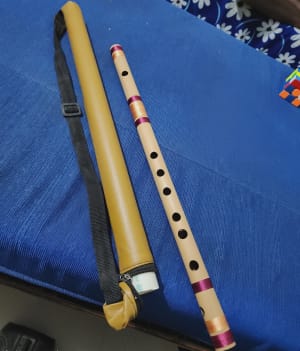
Foxit C Natural 7 Hole 19 inch bansuri
Scale: C NaturalBeginners starting their flute journey
Why we recommend it
- • Affordable entry point
- • Suitable for initial practice
- • Bamboo material
- • Good tuning at this price
Keep in mind
- • Tuning may not be as consistent as pro flutes
- • Quality can vary between instruments
- • Flute may have natural bamboo marks
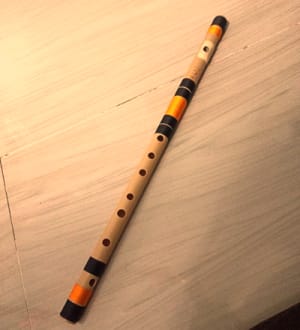
Radhe Flutes PVC Fiber
Scale: C NaturalBeginners who want to use a PVC flute
Why we recommend it
- • Quality of PVC material
- • Tuning is great for the price
- • Very durable (won't crack easily)
Keep in mind
- • The cork may get displaced, but can be fixed
🎋 Bamboo or PVC Flute?
Generally, we recommend starting with a bamboo flute when possible. It gives you the traditional playing experience and is the type of instrument most players eventually use.
However, if a good bamboo flute is outside your budget, a PVC flute can also be fine for getting started. For a beginner, the most important thing is developing the ability to:
- Produce a clean sound
- Control the breath
- Cover the holes properly
- Practice Sa Re Ga Ma
You don't need an expensive flute to develop these fundamentals.
🔎 Check Hole Spacing
One useful thing to look at when buying a budget flute is the position and spacing of the finger holes.
The holes should be positioned according to the intended scale. Do not assume that every flute will have the same spacing.
If holes appear to be placed in an obviously uniform or mechanically even pattern (equal distances), be cautious. Traditional flute hole placement is acoustic, not simply dividing the flute evenly.
Also consider whether the spacing is comfortable for your hands to avoid frustrating practice sessions.
🎯 What to Check Before Buying
1. Don't choose a large flute simply because it's cheap
Listings offering large G Base or E Base flutes at low prices shouldn't automatically be considered bargains for beginners. Larger flutes require difficult finger reach and more breath control. Choose what's appropriate for your physical comfort.
2. Check reviews from actual users
Pay attention to comments about tuning, sound quality, cracks, hole finishing, air leakage, and whether notes match the advertised scale. Do not rely only on the product title.
3. Advertised tuning may not tell the whole story
Budget flutes can have variations in pitch, octave accuracy, individual notes, and hole size. If 100% accurate tuning is vital, consider investing in a professionally made flute when budget allows.
4. Check the material
For traditional bansuri, bamboo is recommended. However, PVC is a practical starting option when budget is the main concern. Don't reject a flute just because it's inexpensive if it helps you practice fundamentals.
5. Make sure the flute is comfortable to hold
Consider overall length, finger-hole spacing, your hand size, and weight. A technically good flute is still a poor choice if you cannot comfortably cover the holes.
🎵 When Should You Upgrade?
You don't have to buy an expensive flute on your first day. A budget flute is enough to determine if you genuinely enjoy playing.
Consider upgrading when you can consistently:
Frequently Asked Questions
🪈 Ready to Choose?
Start with something comfortable that allows you to develop basic sound and fingering. Once you master the fundamentals, move to a better-quality, professionally tuned flute.
Amazon Affiliate Disclosure: FluteSangam may earn a commission when you purchase qualifying products through links on this page. As an Amazon Associate I earn from qualifying purchases. Our recommendations help readers compare available options. Prices, availability, specifications, and reviews may change, so verify on the retailer's site before purchasing.