
Bansuri Alankar Practice Guide: Master 60 Sargam Paltas
In Indian classical music, Alankars (melodic ornaments or Paltas) are structured swara permutations that develop muscle memory, breath support, pitch centering, and finger speed. Our 60-palta curriculum is structured across three difficulty tiers to guide your flute journey from foundational scales to virtuoso taans.
Select Your Practice Tier:
Fundamental Sargam Paltas
Sa Re Ga Ma step progressions, double-note repetitions (SaSa ReRe), 3-note and 4-note consecutive intervals. Ideal for developing clean tone and finger sealing.
Vakra & Cross-Step Paltas
Note-skipping patterns (Sa-Ga, Re-Ma), zigzag vakra steps, half-hole intonation drills, and rhythmic syncopation across Teentaal cycles.
Master Virtuoso & Drut Taans
Complex 16-note spiral taans, rapid Gamak throat oscillations, 3-octave leaps (Mandra to Taar Saptak), and lightning Jhala speed drills.
The 4 Pillars of Alankar Sadhana
Practicing straight notes in slow tempo (Vilambit laya) trains diaphragmatic stability, preventing pitch flattening when transitioning between low (Mandra) and middle (Madhya) octaves.
Repetitive swara permutations program finger pads to seal holes instinctively, removing awkward delays when playing fast Bandishes or Raga Taans.
Non-linear skipping patterns (e.g. Sa-Ga, Re-Ma, Ga-Pa) develop independent tendon control in the ring and pinky fingers, essential for expressive Indian classical flute.
Practice each alankar across classical subdivisions while keeping your metronome pulse constant (e.g. at a steady 60 BPM):
- Ekgun (Single Speed): 1 note per beat (1.0s per note). Focus on pure intonation and diaphragmatic breath support.
- Dugun (Double Speed): 2 notes per beat (0.5s per note). Keep the metronome tempo unchanged at 60 BPM; only note density doubles.
- Chaugun (Quadruple Speed): 4 notes per beat (0.25s per note). Metronome remains at 60 BPM while fingers articulate four even notes per beat.
💡 Note: Increasing the metronome pulse itself (e.g. 50 → 60 → 75 BPM) is a separate speed progression practiced once subdivisions are fully steady.
The 4 Classical Varna Classifications (Ancient Shastric Origins)
In ancient Indian music treatises including Bharata Muni's Natya Shastra and Sarangadeva's Sangita Ratnakara, musical movement is categorized into four primary Varnas (melodic motions). Every Alankar is built upon these four core movements:
Repetition of the same note without pitch shift (e.g. Sa-Sa-Sa, Re-Re-Re). Essential on flute for establishing embouchure centering and breath steadiness.
Continuous upward movement from lower to higher frequencies (e.g. Sa Re Ga Ma Pa Dha Ni Sā). Trains progressive finger lifting and micro-air acceleration.
Continuous downward movement from higher to lower frequencies (e.g. Sā Ni Dha Pa Ma Ga Re Sa). Trains precision hole closing and lower octave air relaxation.
Complex permutations blending ascending, descending, and jumping contours (e.g. Sa-Ga-Re-Ma, Sa-Re-Ga-Sa). Forms the basis of all intermediate and advanced Taans.
Adapting Alankars Across the 10 Hindustani Thaats
Once you master the standard Shuddha Swara Alankars in Bilawal Thaat (all natural notes), transfer the exact same finger formulas to other Thaats by introducing Komal (flat) and Tivra (sharp) notes. This prepares you directly for Classical Ragas:
| Thaat Name | Swara Structure | Bansuri Half-Hole Technique | Representative Ragas |
|---|---|---|---|
| Bilawal Thaat | Sa Re Ga Ma Pa Dha Ni | All natural full finger seals | Alhaiya Bilawal, Deskar |
| Kalyan Thaat | Sa Re Ga Ma# Pa Dha Ni | Open hole 4 half for Tivra Ma | Raga Yaman, Shuddha Kalyan |
| Khamaj Thaat | Sa Re Ga Ma Pa Dha ni | Half seal hole 1 for Komal Ni | Raga Khamaj, Desh, Tilang |
| Kafi Thaat | Sa Re ga Ma Pa Dha ni | Half seal hole 3 (ga) & hole 1 (ni) | Raga Kafi, Bageshree, Bhimpalasi |
| Bhairav Thaat | Sa re Ga Ma Pa dha Ni | Half seal hole 2 (dha) & hole 5 (re) | Raga Bhairav, Ahir Bhairav |
| Bhairavi Thaat | Sa re ga Ma Pa dha ni | All 4 Komal half-hole adjustments | Raga Bhairavi, Malkauns |
Laya (Tempo) & Subdivision (Layakari) Reference
In Bansuri riyaz, speed has two distinct dimensions: Layakari (subdivision density per beat) and Tempo (metronome BPM). Always master subdivision density (1, 2, and 4 notes per beat) at a constant pulse before accelerating the metronome BPM itself:
Recommended Daily 30-Minute Alankar Routine
Frequently Asked Questions: Bansuri Alankars
Q: How many alankars should I practice each day?
Quality and steadiness surpass quantity. It is far more effective to practice 3 to 5 Alankars thoroughly in 3 speeds (Vilambit, Madhya, Drut) with a Tanpura drone for 20 minutes than rushing through 20 patterns without intonation precision.
Q: What is the difference between an Alankar and a Taan?
An Alankar (Palta) is a rigid, mathematical, symmetrical swara exercise practiced across the full octave to build technical dexterity. A Taan is a musical phrase played at fast speed during a classical Raga performance, strictly adhering to the Raga's specific melodic rules (Vadi, Samvadi, Varjit swaras, and Pakad).
Q: Should I tongue every note or use continuous breath during Alankars?
Both are practiced: Legato / Meend Alankars use a single continuous breath with finger articulative pulses, while Staccato / Taan Alankars use gentle throat and micro-tongue pulses (soft 'Da' or 'Ta-Ka') to give rhythmic punch to fast taans.
Q: Why do my fingers stumble more in Avaroha (descending) than Aroha (ascending)?
Ascending involves lifting fingers (releasing tension), whereas descending requires sealing holes simultaneously without air leaks. To fix this, practice Avaroha separately at half the metronome speed (e.g. 50 BPM) focusing on flattening the finger pads directly over the center of the tone holes.
Daily Flute Practice Routine
Build a complete daily routine covering breath control, tone quality, finger agility, rhythm, and classical expression.
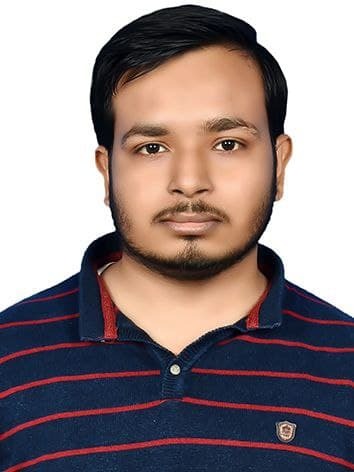
About the Author
Written and practice-tested by Aplut, a self-taught bansuri learner practising since 2022. Content is built on direct practice experience and careful research into classical traditions. Because musical lineages and fingering conventions vary, suggestions and corrections are always welcomed via our contact page or at [email protected]. First-hand instrument experience is identified clearly whenever gear is reviewed.